FHA Mortgage Payment Calculator: Estimate With Taxes & MIP
An FHA mortgage payment calculator helps you estimate your total monthly payment before you apply for an FHA loan. It accounts for your principal and interest payment, upfront and annual mortgage insurance premiums (MIP), property taxes, and homeowners insurance. You get a realistic picture of what you can afford instead of just guessing based on the home price. This matters because FHA loans come with unique costs that conventional loans do not have, and missing these details can throw off your budget by hundreds of dollars each month.
This article walks you through how to calculate your FHA monthly payment accurately. You will learn what goes into the calculation, why mortgage insurance adds to your costs, and how lenders evaluate your payment when deciding whether to approve your loan. We also compare FHA payment structures to conventional loans so you can see which option makes more financial sense for your situation. By the end, you will know exactly what to expect when you run the numbers and take your next step toward homeownership.
Why accurate FHA payment estimates matter
You need to know your real monthly payment before you start house hunting. Underestimating your payment by even $200 per month can push you into a home you cannot comfortably afford, which leads to financial stress or worse, foreclosure. An FHA mortgage payment calculator gives you a clear view of your total housing cost, including the mortgage insurance premiums that many first-time buyers overlook. When you run the numbers correctly, you avoid falling in love with a property that sits outside your budget and wasting time on applications that will never get approved.
Budget planning and affordability
Most lenders qualify you based on your debt-to-income ratio (DTI), which compares your monthly debts to your gross income. If you calculate only your principal and interest but ignore property taxes, homeowners insurance, and MIP, you will think you qualify for more house than you actually do. For example, a $250,000 home might show a $1,100 principal and interest payment, but once you add $300 in taxes, $150 in insurance, and $200 in MIP, your total payment jumps to $1,750. That extra $650 can make or break your loan approval if your DTI climbs above 43 percent.
Accurate estimates prevent you from wasting time on properties you cannot afford and keep your application process smooth.
Avoiding loan denial surprises
Lenders calculate your maximum loan amount using your full monthly payment, not just the base mortgage amount. When you use incomplete numbers, you might assume you can afford a $300,000 purchase when your true buying power sits closer to $240,000. Discovering this gap after you make an offer creates unnecessary stress and can cost you earnest money if you cannot close. Running an accurate FHA mortgage payment calculator early protects you from these expensive mistakes and sets realistic expectations from day one.
How to calculate your monthly FHA payment
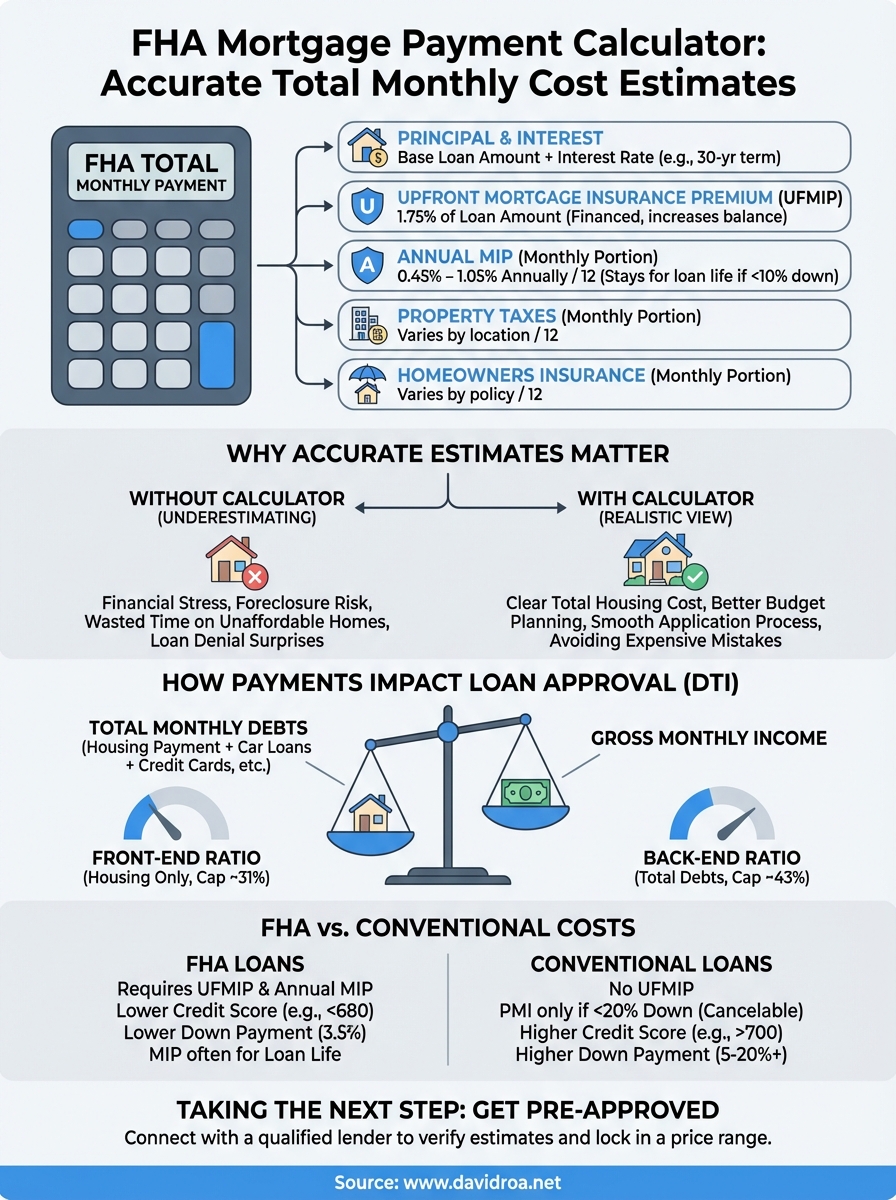
Your FHA monthly payment breaks down into five components that you add together. You start with principal and interest, which covers the loan amount and interest rate. Then you add your upfront mortgage insurance premium (UFMIP), your annual MIP divided by 12, your property taxes divided by 12, and your homeowners insurance divided by 12. When you use an fha mortgage payment calculator, it runs these numbers automatically, but understanding the formula shows you where your money goes each month.
The basic payment formula
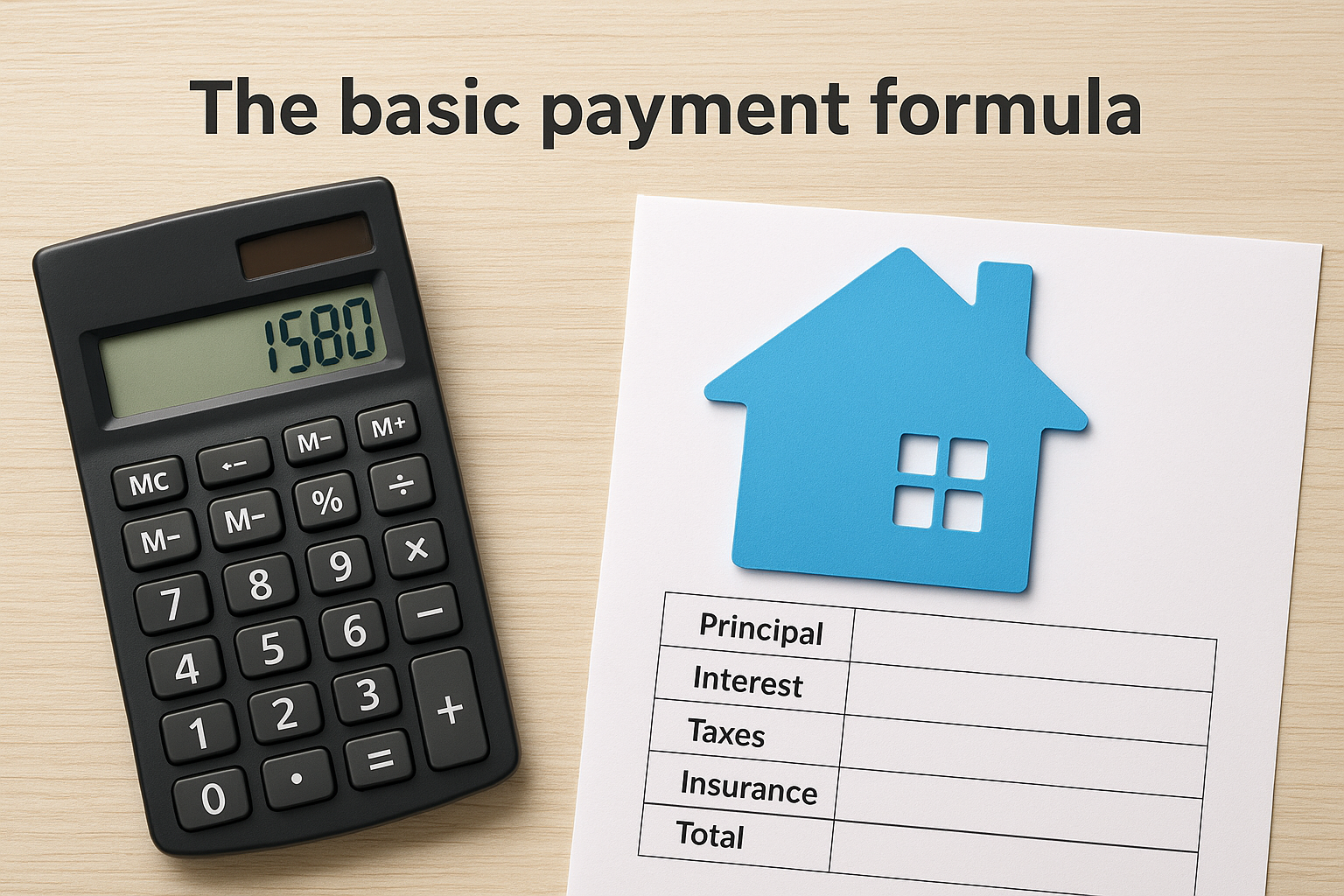
Principal and interest forms the foundation of your payment. Lenders calculate this using your loan amount, interest rate, and loan term (usually 30 years). For a $250,000 FHA loan at 6.5 percent interest, your principal and interest payment sits around $1,580. The formula uses standard amortization that shows how much goes toward interest versus principal monthly.
Knowing your base payment helps you plan for the additional FHA costs that come on top.
Key FHA-specific additions
Mortgage insurance premiums add significant cost to your payment. You pay an upfront premium of 1.75 percent of your loan amount, which gets financed into the loan, plus an annual premium ranging from 0.45 percent to 1.05 percent. Property taxes and homeowners insurance vary by location, but you must include them because lenders require escrow accounts for FHA loans.
Understanding mortgage insurance premium costs
FHA loans require mortgage insurance premiums (MIP) that protect lenders if you default. You pay two types: an upfront premium at closing and an annual premium divided into monthly payments. These costs differ from conventional PMI because you cannot cancel MIP on most FHA loans unless you put down at least 10 percent. The upfront premium gets financed into your loan balance, meaning you pay interest on it, while the annual premium hits your monthly payment directly.
Upfront mortgage insurance premium (UFMIP)
The upfront premium equals 1.75 percent of your loan amount. For a $250,000 FHA loan, you pay $4,375 at closing, though most borrowers roll this into their mortgage. This increases your loan balance to $254,375, meaning higher monthly payments. When you use an fha mortgage payment calculator, make sure it includes this upfront cost in your loan amount for accurate numbers.
Rolling the upfront premium into your loan increases both your balance and your monthly payment over 30 years.
Annual mortgage insurance premium (MIP)
Your annual MIP ranges from 0.45 percent to 1.05 percent depending on your down payment and loan term. For most borrowers with less than 5 percent down on a 30-year loan, the rate sits at 0.85 percent annually. That translates to roughly $177 per month on a $250,000 loan, which you pay until you refinance or pay off the mortgage.
How monthly payments impact FHA loan approval
Lenders use your total monthly payment to determine whether you qualify for an FHA loan. They calculate your debt-to-income ratio (DTI) by dividing your monthly debts, including your housing payment, by your gross income. FHA guidelines typically allow a DTI up to 43 percent, though some lenders approve ratios as high as 50 percent with strong compensating factors. Your payment directly affects this ratio, meaning a higher monthly cost reduces your borrowing power or disqualifies you entirely if your income cannot support it.
The DTI calculation process
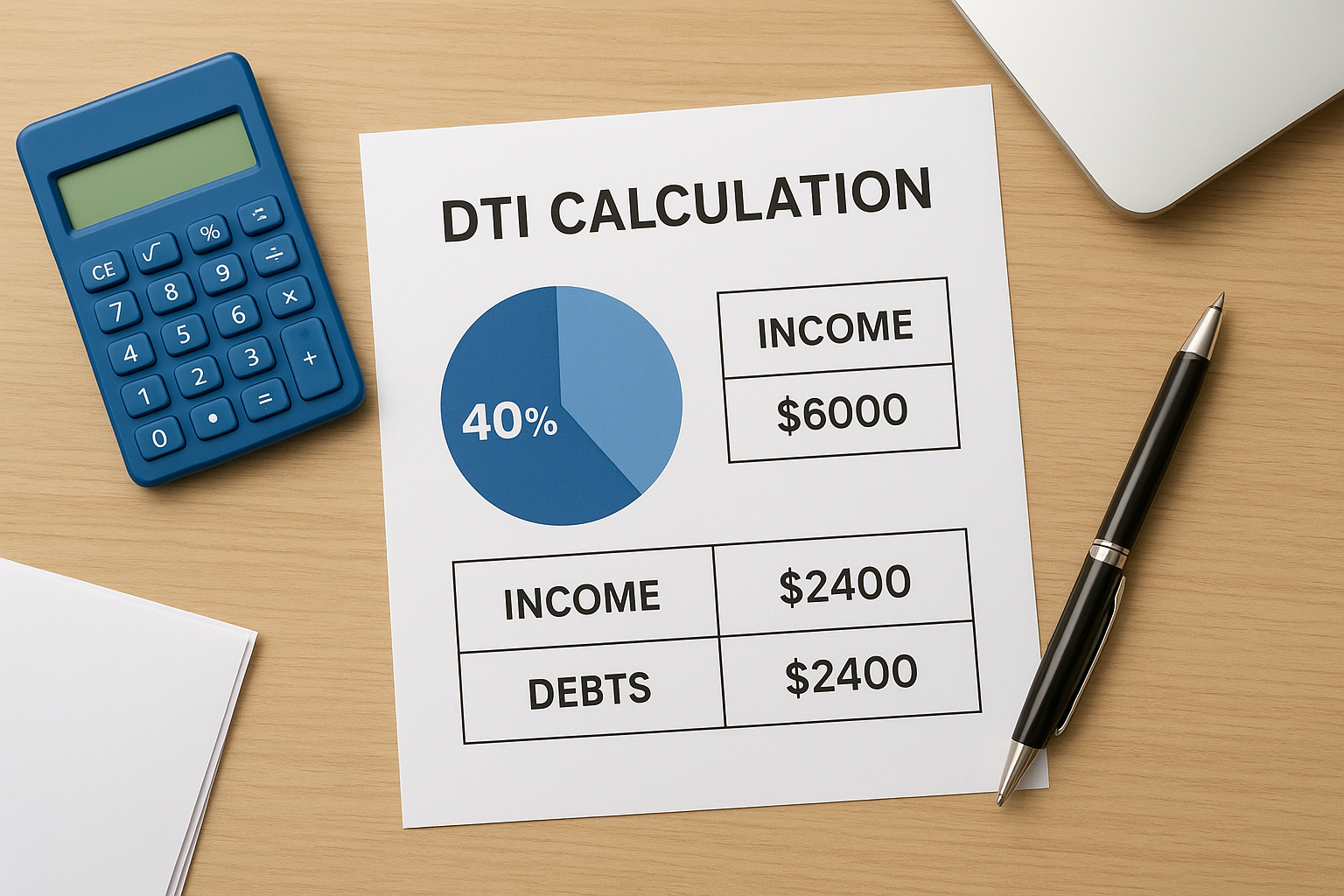
Your lender adds your full housing payment to all other monthly debts like car loans, credit cards, and student loans. If you earn $6,000 per month and your total debts equal $2,400, your DTI sits at 40 percent. An fha mortgage payment calculator helps you model different scenarios before applying, showing you how changes in home price or down payment affect your qualification status.
Running payment scenarios before you apply saves you from wasting time on homes outside your approval range.
Front-end versus back-end ratios
Underwriters review two ratios when evaluating your application. The front-end ratio compares your housing payment alone to your income, typically capped at 31 percent. Your back-end ratio includes all monthly debts and usually maxes out at 43 percent for FHA loans.
Comparing FHA costs against conventional loans
FHA loans and conventional loans carry different cost structures that affect your monthly payment and total interest paid over time. FHA loans require both upfront and annual mortgage insurance premiums regardless of your down payment, while conventional loans only require PMI when you put down less than 20 percent. You can cancel conventional PMI once you reach 20 percent equity, but FHA MIP stays for the life of the loan unless you put down at least 10 percent upfront. An fha mortgage payment calculator helps you compare both options side by side to see which saves you more money.
When FHA costs less
FHA loans make financial sense when you have less than 10 percent for a down payment or a credit score below 680. Interest rates on FHA loans often run lower than conventional rates for borrowers with fair credit, offsetting some of the MIP costs. Your monthly payment might sit $100 to $150 higher than conventional due to mortgage insurance, but you qualify with 3.5 percent down instead of needing 5 to 20 percent.
FHA loans give you access to homeownership sooner if you cannot wait to save a larger down payment.
When conventional makes more sense
Conventional loans cost less monthly when you can put down 10 percent or more and maintain a credit score above 700. You avoid the upfront premium entirely and cancel PMI faster, reducing your total interest paid over the loan term.
Taking the next step with your FHA loan
Running an fha mortgage payment calculator gives you the exact numbers you need to make an informed decision. You now understand how principal, interest, mortgage insurance premiums, taxes, and insurance combine to create your total monthly payment. These calculations show you whether a property fits your budget before you waste time touring homes outside your approval range. Your next move involves connecting with a qualified lender who can verify these estimates and pre-approve you for a specific loan amount.
Getting pre-approved sets you apart from other buyers because sellers know you can close the deal. You lock in a realistic price range, avoid disappointment, and move faster when you find the right property. Contact David Roa to discuss your FHA loan options and get personalized payment estimates based on your financial situation. Working with an experienced mortgage professional who has funded over $150 million in loans ensures you get competitive rates and avoid costly mistakes during the application process.
