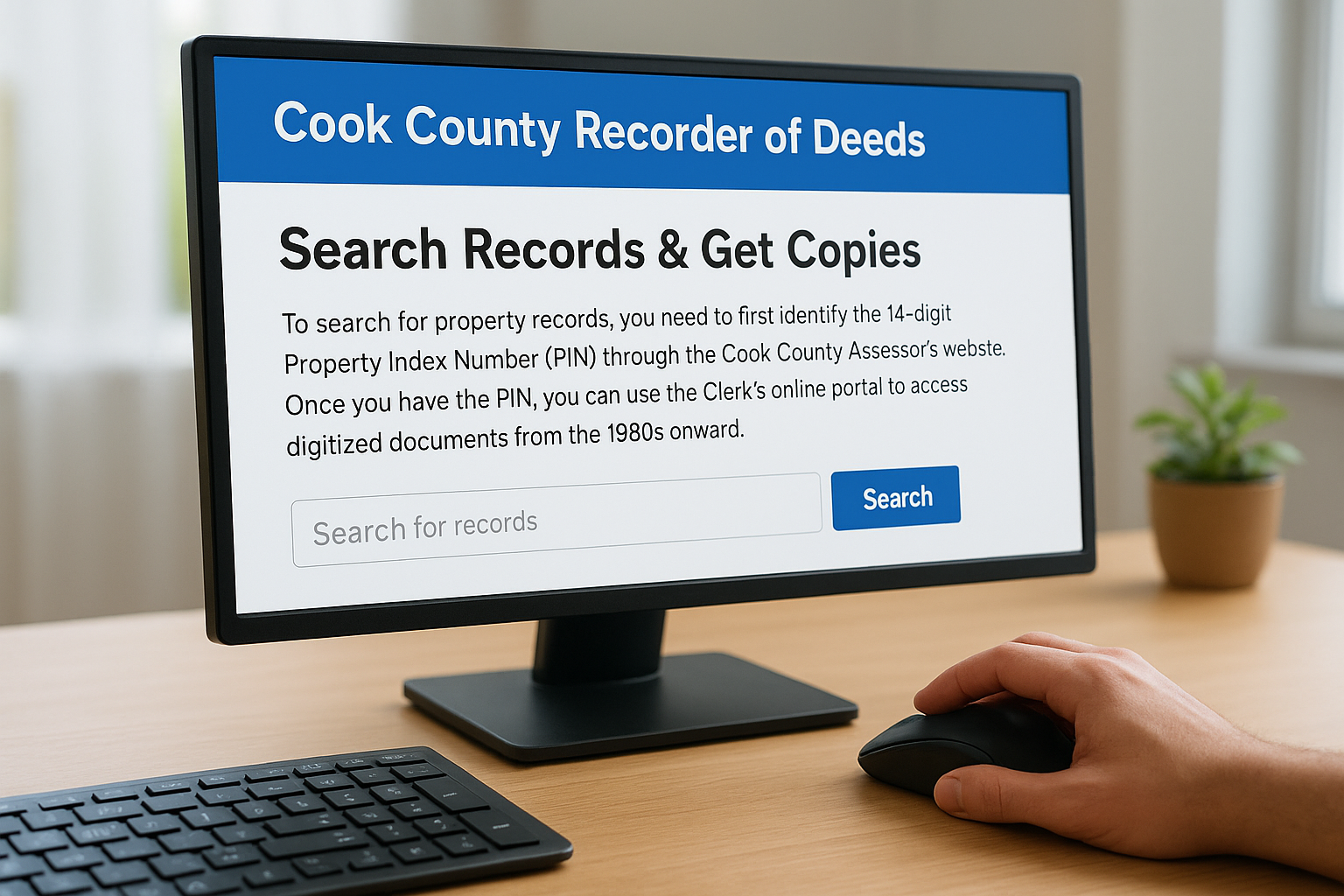
Cook County Recorder Of Deeds: Search Records & Get Copies
Whether you're buying your first home, refinancing an existing mortgage, or building a real estate investment portfolio, you'll likely need to access the Cook County Recorder of Deeds at some point. This office, now merged with the Cook County Clerk's Office, is the official repository for property records across one of the largest counties in the United States.
As a mortgage broker serving the Chicago area for over 25 years, I've guided countless clients through property transactions that require deed searches, title verification, and document recording. Understanding how to navigate this system saves you time, prevents closing delays, and helps you verify ownership before committing to any deal.
This guide walks you through everything you need to know: how to search property records online, obtain certified copies, record new documents, and find the right contact information. Let's get you the answers you came here for.
What the Cook County Recorder of Deeds is now
The Cook County Recorder of Deeds officially merged with the Cook County Clerk's Office in 2020. You now access all recording services, property searches, and deed copies through the unified Cook County Clerk's Office, which operates both functions under one administrative roof. This consolidation affects where you navigate online and who you contact, but the underlying records and services remain intact.
The merger changed where you go, not what you need
This consolidation means you'll visit the Cook County Clerk's official website instead of a separate recorder portal. The same property records remain available, and the same document types get recorded at the same downtown Chicago location (118 North Clark Street). Your online searches, in-person visits, and mail requests all flow through the Clerk's Office now.
The transition preserved every historical record. Documents recorded before the merger sit in the same database alongside newer filings, so you can search across decades without switching systems or databases.
The merge streamlined access but kept every historical record intact and searchable.
What you still get from the office
All recording and retrieval services continue without interruption. You can search deeds dating back to the 1800s, obtain certified copies for closing transactions, and record new mortgages, releases, or property transfers. The office maintains indexes by Property Index Number (PIN), grantor, grantee, and document type.
Recording fees, certification costs, and processing timelines stayed largely the same after consolidation. The office processes thousands of documents weekly, so expect standard turnaround times: same-day processing for in-person recordings, 10 to 15 business days for mail requests, and instant results for online searches of already-recorded documents.
Step 1. Find your PIN and property details
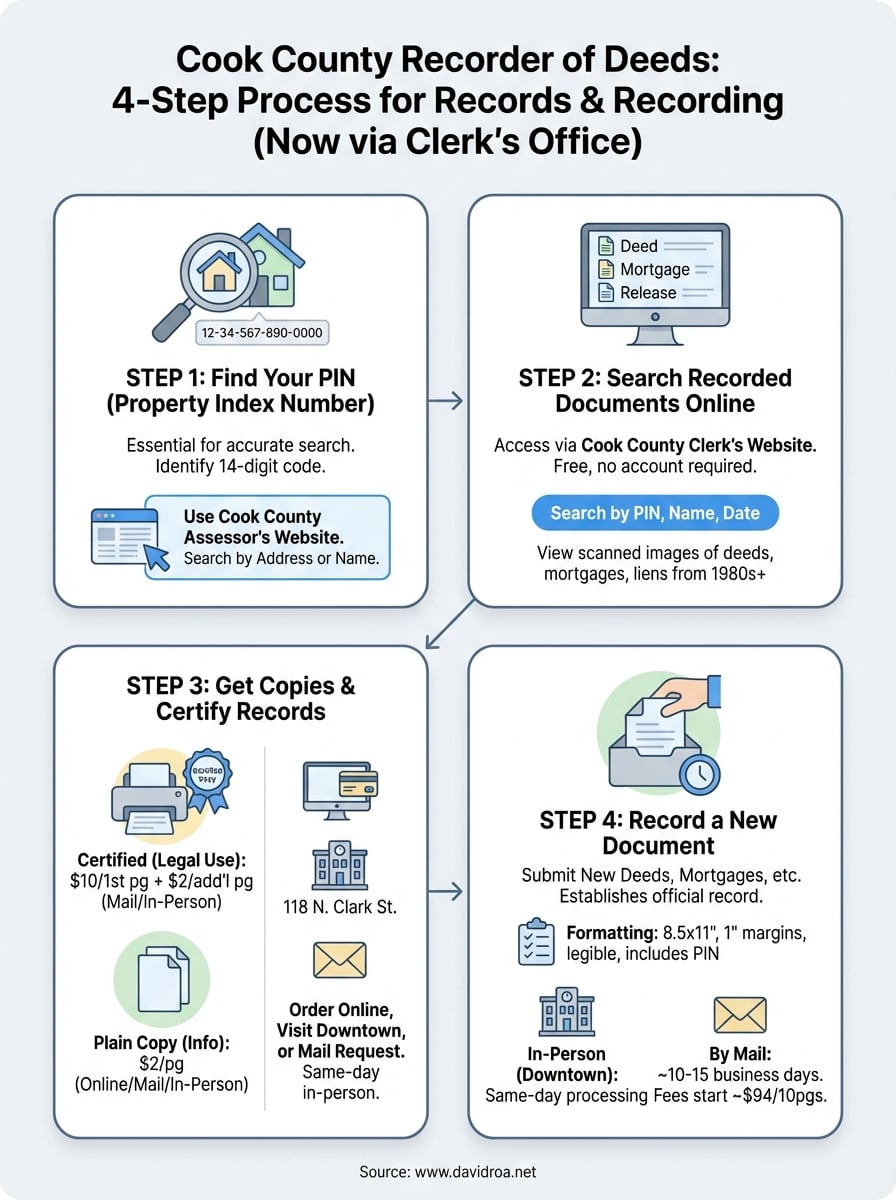
Before you search the Cook County Recorder of Deeds records, you need your property's Property Index Number (PIN). This 14-digit code uniquely identifies every parcel in Cook County and serves as the primary search tool for pulling deed histories, mortgage records, and ownership transfers. Without the PIN, you'll waste time scrolling through thousands of entries sorted only by names or incomplete addresses.
Use the Cook County Assessor's website to locate your PIN
Navigate to the Cook County Assessor's official website and use the property search tool on the homepage. You can search by street address, owner name, or partial PIN if you already have part of it. Type in the full address including city and ZIP code for the fastest results.
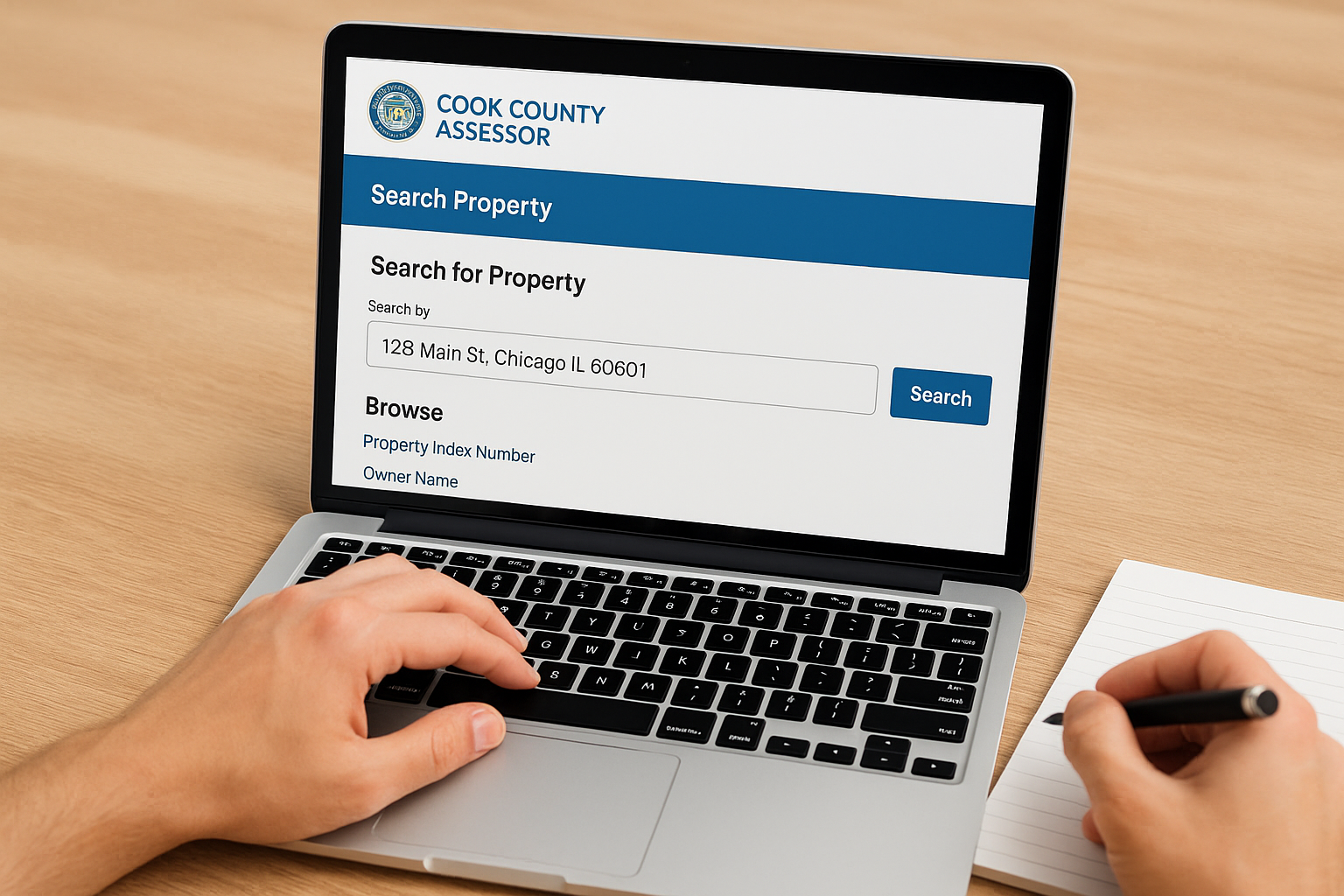
The PIN eliminates confusion when multiple properties share similar addresses.
Once you find the property, the Assessor's page displays the full 14-digit PIN at the top of the results along with current assessed value, property class, and ownership name. Write down or screenshot this PIN because you'll use it for every recorder search going forward. The Assessor's database also shows the legal description (subdivision, lot, and block numbers), which appears on official deeds and confirms you're pulling the correct property records.
Step 2. Search recorded documents online
The Cook County Clerk's Office provides a free online portal where you can search every recorded document without creating an account or paying fees. You access this through the official Cook County Clerk website under the "Vital Records & Recorder" section. The database includes deeds, mortgages, releases, liens, and foreclosures recorded from the 1980s to the present, with some older documents available depending on digitization efforts.
Navigate the online document search tool
Start at the Cook County Clerk's homepage and click on the "Search Recorded Documents" link. You'll reach a search interface with multiple fields: PIN, document number, grantor name, grantee name, and date range. Enter your 14-digit PIN in the designated field and leave the date range open if you want the complete history.
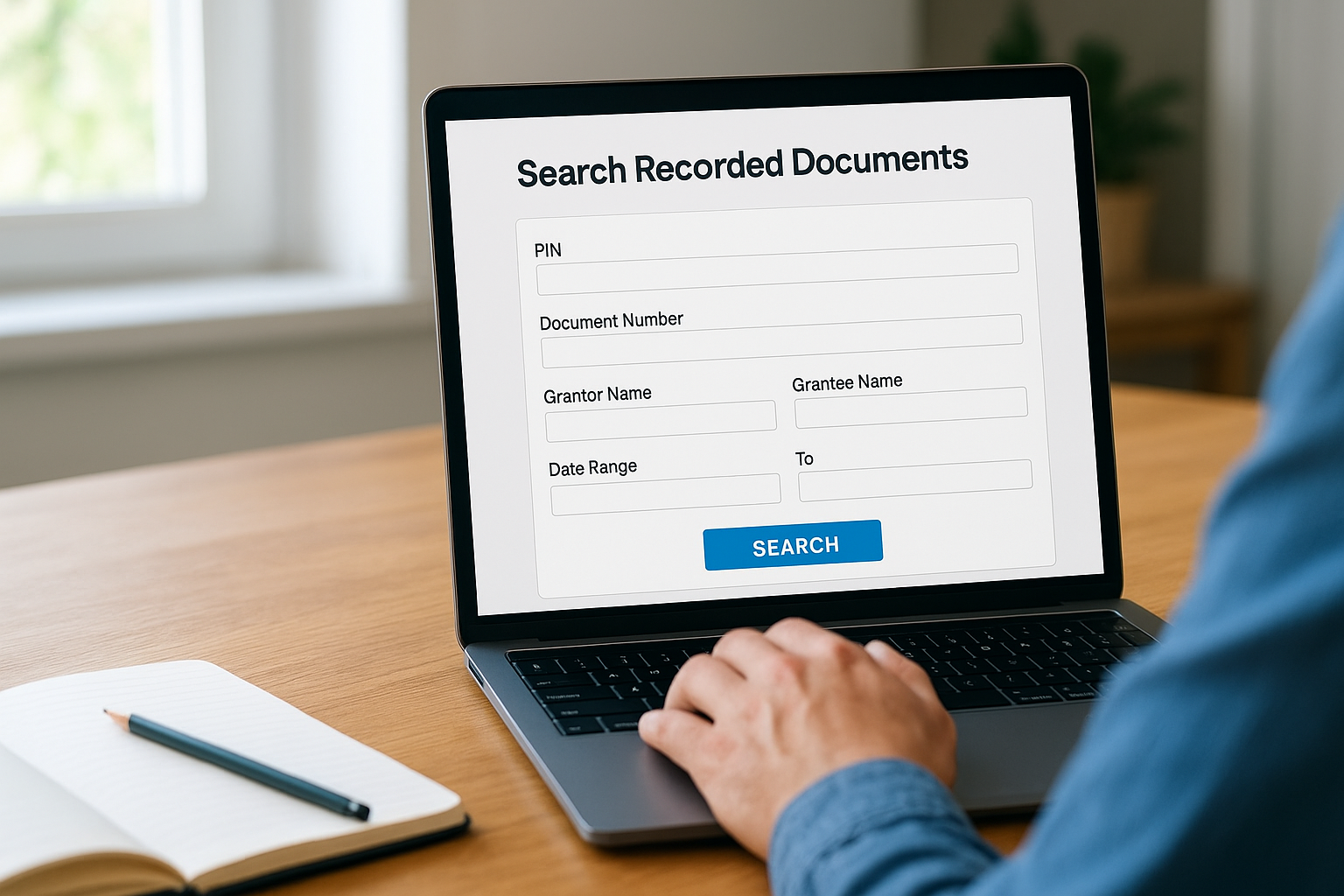
The system returns a chronological list of every recorded document tied to that property. You'll see the document type (Warranty Deed, Mortgage, Release), recording date, document number, and parties involved. Click any entry to view the scanned image of the original document.
Online searches pull records instantly but only show documents already processed and indexed.
Step 3. Get copies and certify records
Once you locate the document you need in the online search, you can request official copies directly from the Cook County Recorder of Deeds system (now handled by the Clerk's Office). Viewing documents online costs nothing, but obtaining certified or plain copies for closing transactions, title insurance, or legal proceedings requires a fee and formal request. You have three options: order online, visit in person, or mail your request.
Request copies through the online portal
Click the "Order Copy" button next to any document in your search results. The system prompts you to specify whether you need a certified copy (with the official seal and signature) or a plain copy. Certified copies cost $10 for the first page and $2 for each additional page. Plain copies run $2 per page. You'll pay with a credit or debit card, then receive the document by mail within 10 to 15 business days.
Certified copies carry legal weight for closings, court filings, and title disputes.
Visit the downtown office for same-day service
Walk into the Cook County Clerk's Office at 118 North Clark Street in Chicago during business hours (Monday through Friday, 9 AM to 5 PM). Bring your document number or PIN and request copies at the counter. Staff process in-person requests immediately, and you leave with certified copies the same day.
Step 4. Record a new document in Cook County
When you need to record a new deed, mortgage, or property-related document with the Cook County Recorder of Deeds, you submit directly to the Clerk's Office either in person or through the mail. Recording establishes the official public record of your transaction and protects your legal interest in the property. You'll pay a recording fee based on document type and page count, and the office stamps your document with the recording date and number.
Prepare your document before submission
Your document must meet specific formatting requirements to be accepted. Use 8.5 x 11-inch white paper with at least 1-inch margins on all sides. The text must be legible, typed or clearly printed in black ink, and include the preparer's name and address at the bottom of the first page. Include the 14-digit PIN and legal description within the document body.
Proper formatting prevents rejection and delays that push back your closing date.
Submit at the downtown office or by mail
Walk into 118 North Clark Street during business hours or mail your original document with a check payable to "Cook County Clerk." Recording fees start at $94 for the first 10 pages of most documents, plus $15 for each additional 10 pages. Include a self-addressed stamped envelope if you want the recorded original returned by mail.
Next steps
You now have everything you need to search property records, obtain certified copies, and record new documents through the Cook County Recorder of Deeds system. These tools work whether you're verifying a property before purchase, preparing for a refinance, or confirming clean title during a real estate investment deal. Most transactions move faster when you pull records early and identify any liens or title issues before your closing date.
Property research pairs directly with securing the right financing. Once you verify ownership and confirm there are no hidden complications in the county records, your next move is locking in competitive mortgage terms that match your transaction timeline. If you need expert guidance on residential loans, commercial financing, or real estate investment capital in the Chicago area, reach out to discuss your specific situation and get pre-approved before you make an offer.
