FHA Approved Condos List: How To Check HUD Status In Minutes
Finding out if a condo qualifies for FHA financing can make or break your home purchase. The FHA approved condos list, officially maintained by HUD, is your go-to resource for checking eligibility before you commit to a property that won't qualify for your loan.
Here's the reality: not every condominium complex meets FHA requirements. If you're planning to use an FHA loan (one of the most accessible options for first-time buyers and those with smaller down payments), the condo's approval status matters just as much as your own credit and income. With over 25 years helping buyers secure FHA and conventional financing, I've watched deals fall apart simply because no one checked the HUD database early in the process.
This guide walks you through exactly how to search the official HUD list, what the different approval statuses mean, and what to do if your dream condo isn't currently approved. You'll have the answers you need in just a few minutes.
What the FHA approved condos list is
The FHA approved condos list is the official database maintained by the U.S. Department of Housing and Urban Development (HUD) that tracks every condominium project eligible for FHA-insured financing. You access this database through HUD's online portal, where you can search by address, project name, or FHA case number to verify if a specific condo complex has received approval from the Federal Housing Administration.
Why HUD maintains the approval database
HUD requires every condominium project to meet specific financial and legal standards before buyers can use FHA loans to purchase units within that development. The database exists because FHA loans carry federal insurance, which means taxpayers ultimately back these mortgages if borrowers default. By pre-approving entire condo projects rather than individual units, HUD protects both buyers and the insurance fund from developments with poor management, inadequate reserves, or excessive investor ownership.
Your lender cannot approve an FHA loan for a condo unit if the project doesn't appear in this database with an active approval status. This requirement applies regardless of your credit score, down payment, or income. The condo project itself must qualify before you can use FHA financing.
Without HUD approval at the project level, you'll need to consider conventional financing or a different property, even if you personally qualify for an FHA loan.
The three approval statuses you'll see
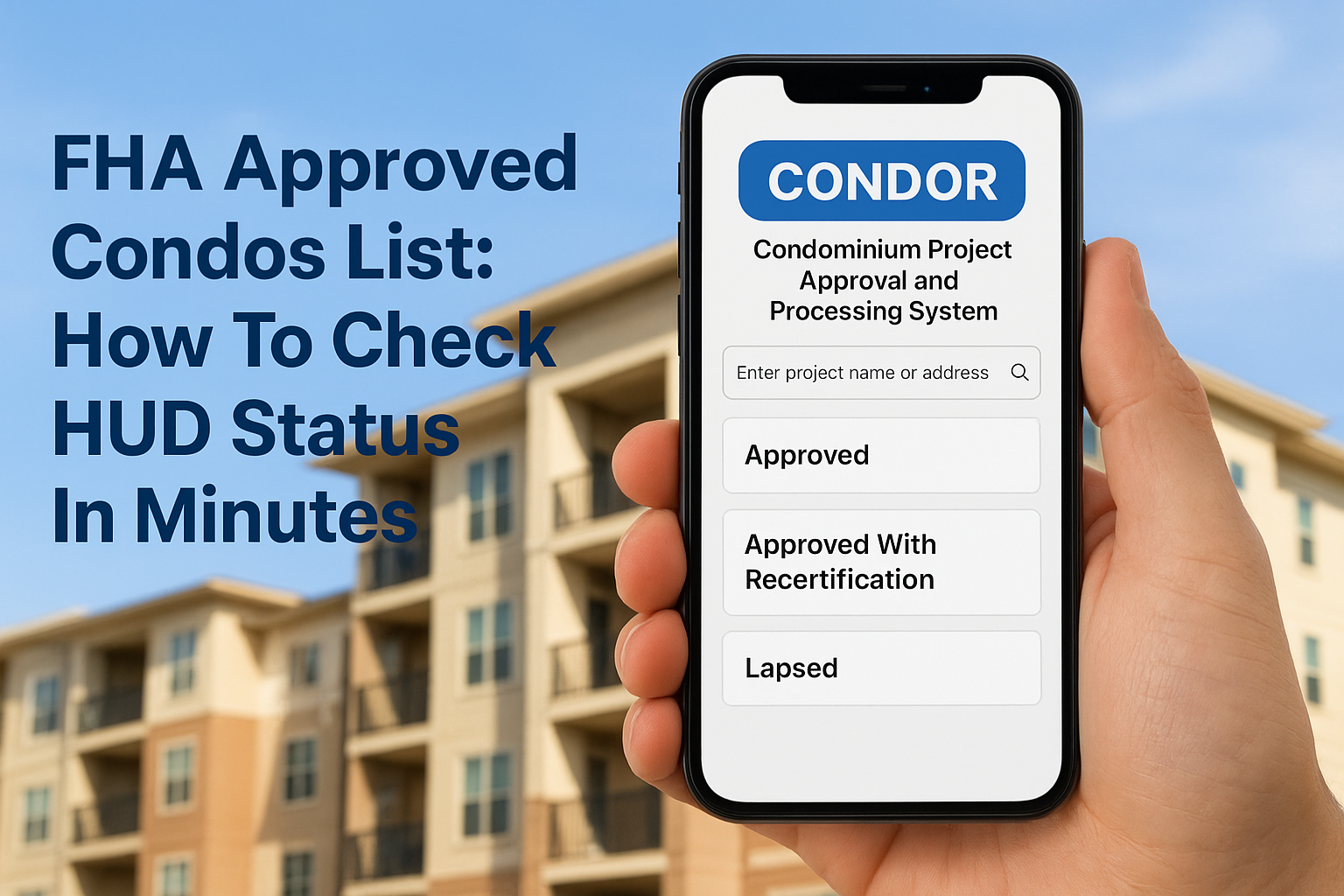
When you search the database, you'll find projects marked with one of three distinct statuses. "Approved" means the project currently meets all FHA requirements and you can proceed with an FHA loan application. These approvals typically last for three years before requiring renewal.
"Approved With Recertification" indicates the project was previously approved, submitted updated documentation, and HUD confirmed it still meets standards. You can use FHA financing for units in these projects just like standard approvals. The recertification process happens when developments renew their status before the original approval expires.
"Lapsed" or "Expired" means the project's approval period ended and the homeowners association (HOA) didn't submit renewal paperwork. You cannot use an FHA loan to purchase a unit in a lapsed project until the HOA completes the recertification process and HUD reinstates approval. Some projects also show as "rejected" if they failed to meet HUD's requirements during review.
Projects sometimes carry approval status as either "Single-Unit Approval" or "Project Approval." Single-unit approvals allow FHA financing for one specific unit within a non-approved complex, but these require substantially more documentation and your lender must handle the approval process directly with FHA. Project approvals cover all units within the development, making the purchase process faster and simpler for everyone involved.
Step 1. Search the HUD condo database
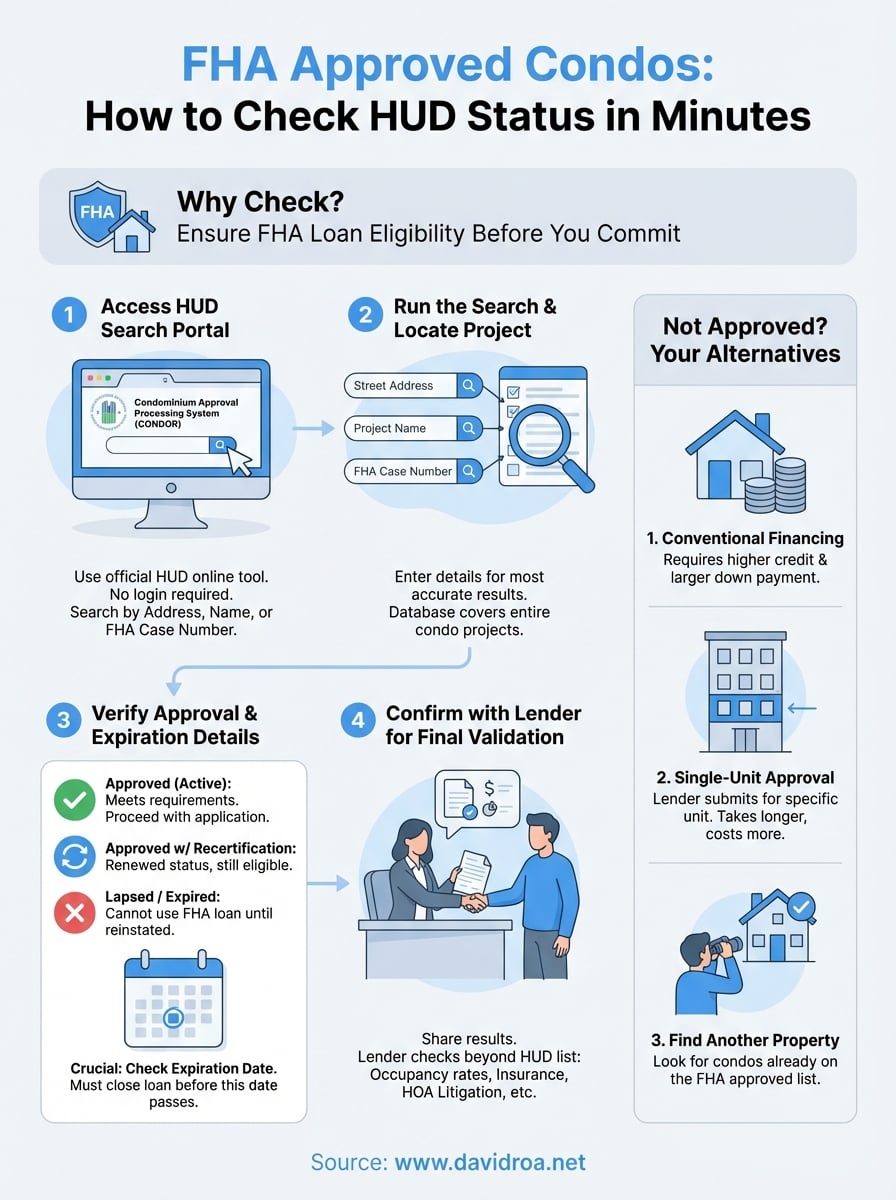
You access the official FHA approved condos list through HUD's Condominium Project Approval and Processing System, commonly called CONDOR. This online portal provides real-time approval data for every condo project that has applied for or received FHA certification. The search process takes less than five minutes once you know where to look.
How to access the HUD search portal
Navigate to the HUD website and locate the Condominium Approval search tool in the single-family housing section. You'll land on a search interface that doesn't require login credentials or special access. The portal works on any device with internet connection, though desktop browsers provide the clearest view of detailed project information.
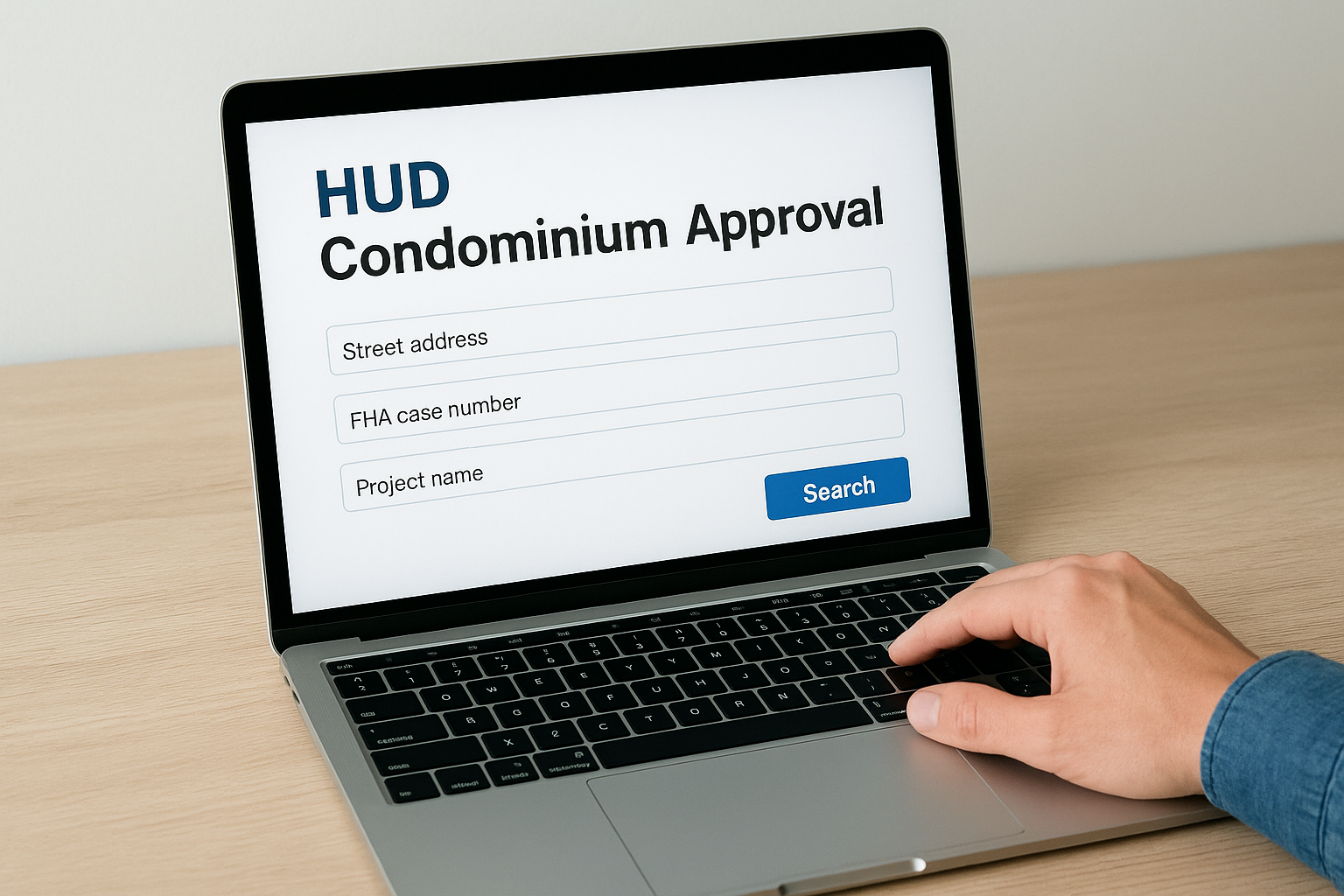
The search interface gives you three primary ways to find a condominium project: by street address, by FHA case number, or by project name. Each search method returns the same comprehensive approval details, so choose whichever information you have readily available. Most buyers start with the property address since that's typically the first piece of information you receive from your real estate agent or online listing.
Running your search effectively
Enter the complete street address including unit number, city, and state for the most accurate results. The database searches based on the master insurance number assigned to the entire condominium complex, not individual units, so you'll see results for the full development even if you enter a specific unit address. Partial addresses work but may return multiple projects if HUD's system finds several potential matches in the same area.
The database updates continuously as projects gain approval, expire, or submit recertification paperwork, so verify status each time you evaluate a new property.
Search by project name works best when you know the official development name registered with HUD, which sometimes differs from the marketing name used in real estate listings.
Step 2. Confirm approval and expiration details
Once you locate your condominium project in the FHA approved condos list, you need to verify two critical pieces of information before moving forward with your purchase. The search results display several data fields for each approved project, and understanding what these mean determines whether you can actually use FHA financing or if timing issues might derail your transaction.
Understanding the approval status details
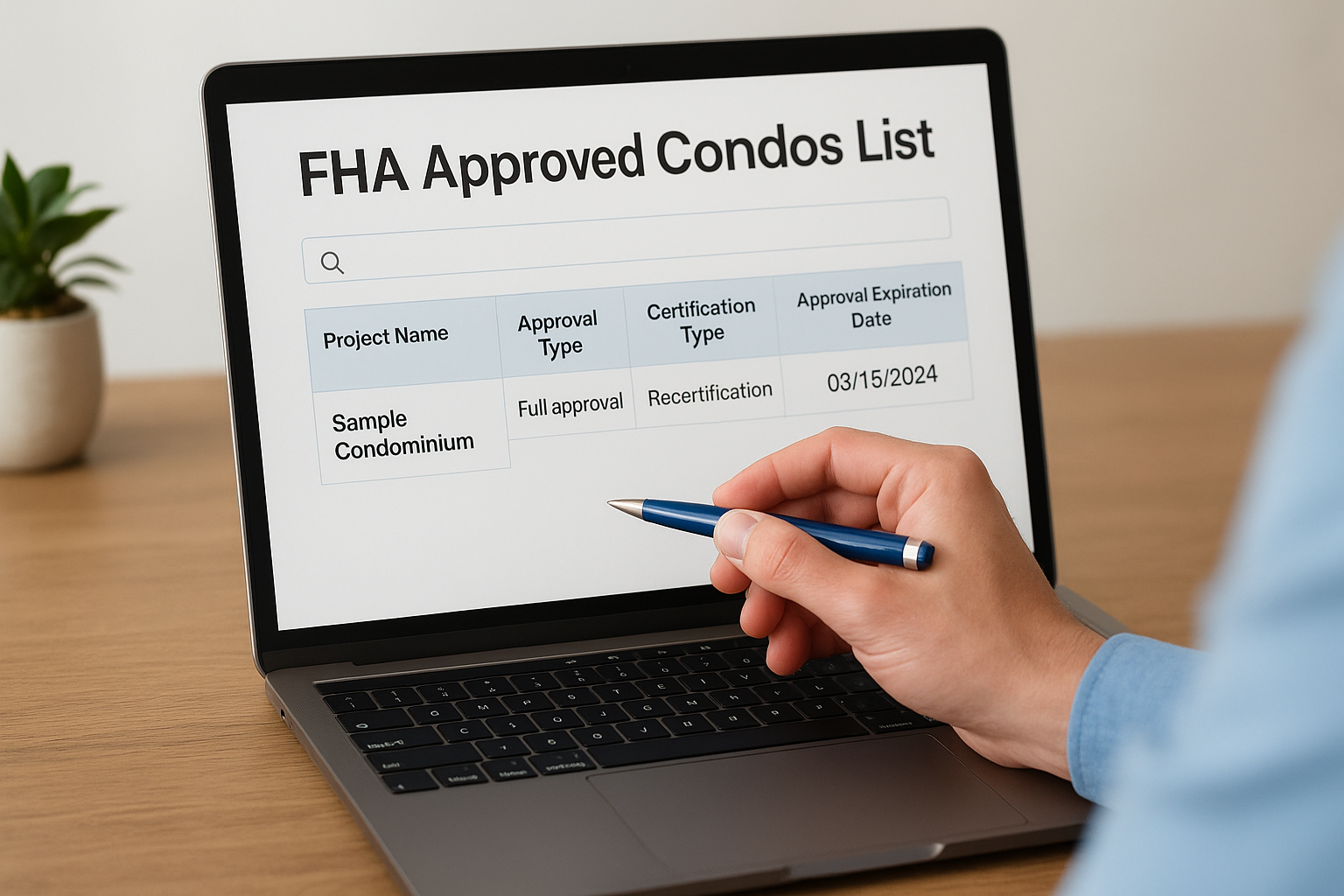
Look for the "Approval Type" field in your search results, which tells you whether the project carries full project approval or single-unit approval status. Project approvals cover every unit in the development and streamline your loan process significantly. Single-unit approvals require your lender to submit additional documentation for the specific unit you're purchasing, which adds two to four weeks to your timeline and increases closing costs.
The results also show the "Certification Type" as either New, Recertification, or Legal Phase Conversion. New certifications apply to projects receiving their first FHA approval. Recertifications indicate the HOA renewed an existing approval before it expired. Legal Phase Conversions appear when a rental apartment building converted to condominiums and needed FHA certification for the new ownership structure.
Checking the expiration date
The "Approval Expiration Date" field shows exactly when the project's FHA certification ends. You must close your loan purchase before this date expires, or the property loses FHA eligibility and your financing falls through. Projects approved today typically receive three-year certifications, but many developments in the database carry approval periods ending within months or even weeks.
Calculate backwards from the expiration date to ensure you have adequate time for offer acceptance, inspections, appraisal, underwriting, and closing.
Compare the expiration date against your expected closing timeline before submitting an offer. Standard purchase transactions take 30 to 45 days from contract to closing, but delays happen frequently in real estate. If the project expires in less than 60 days, confirm with the HOA whether they've already submitted recertification paperwork to HUD.
Step 3. If the condo is not approved
Discovering your target property doesn't appear on the FHA approved condos list doesn't automatically end your purchase plans. You have three distinct paths forward depending on your situation, timeline, and how motivated the seller or HOA is to facilitate FHA financing. Each option requires different actions and carries different timelines, so you need to evaluate which route makes sense for your specific transaction.
Your financing alternatives
Switch to conventional financing if you qualify for higher loan requirements. Conventional loans don't require condo project approval in most cases, though your lender will still review the HOA's financial documents and governance structure. You'll need a larger down payment (typically 5 to 10 percent minimum instead of FHA's 3.5 percent) and stronger credit scores, usually 620 or higher for competitive rates.
Request a single-unit approval through your lender if the project meets basic FHA requirements but lacks project-level certification. Your loan officer submits documentation for just your specific unit, including HOA financials, insurance certificates, and legal documents. This process adds 30 to 45 days to your closing timeline and works only when the complex meets occupancy ratios, has adequate reserves, and maintains proper insurance coverage.
Single-unit approvals cost more in processing fees and require the seller to agree to extended closing dates, which not all sellers will accept.
Walk away and find a different property already listed in the FHA approved condos database. This option makes sense when you're not emotionally attached to the specific unit and multiple comparable properties exist in your target area.
Requesting HOA approval
Contact the HOA board directly to ask if they'll pursue FHA certification for the project. Many boards don't realize their lack of approval limits their buyer pool and reduces property values throughout the development. Explain that FHA certification opens their community to more qualified buyers, which helps all owners when they eventually sell.
The HOA must hire an FHA-approved lender or certification company to complete the application process. Initial approvals typically take 45 to 90 days from submission to HUD approval, so this only works if your seller agrees to a delayed closing or you're willing to keep searching while the process completes.
Step 4. Confirm condo eligibility with your lender
Even after verifying the project appears on the fha approved condos list, you need your lender to validate eligibility before you submit an offer or commit to a purchase contract. The HUD database shows project-level approval, but your specific loan scenario might face additional requirements based on occupancy ratios, insurance coverage, litigation status, or recent changes to the HOA's financial condition. Your loan officer has access to underwriting overlays and current guidelines that determine whether they can actually fund your loan for that particular unit.
What information to provide your lender
Share the complete property address, FHA case number, and approval expiration date from your HUD database search with your loan officer. Include the listing agent's contact information so your lender can request the HOA's resale certificate, master insurance policy, and most recent financial statements. These documents reveal details the database doesn't show, like pending special assessments or insurance gaps.
Provide this information before you make an offer rather than after you're under contract. Your lender needs 24 to 48 hours to review the documentation and confirm they can proceed with FHA financing for that specific project.
What your lender will verify beyond HUD approval
Your lender checks that owner-occupancy rates meet the minimum 50 percent threshold required for FHA loans, which the database doesn't track in real time. They verify the HOA maintains adequate hazard insurance coverage and fidelity bond protection for the association's funds. The review includes checking for any ongoing litigation involving the HOA that might affect property values or create liability issues.
Lenders often discover problems in HOA documents that don't appear in the HUD approval database, so this verification step protects you from financing surprises after you're under contract.
FHA underwriting guidelines change periodically, and some lenders add their own requirements beyond HUD's minimum standards. Your loan officer will confirm their specific institution approves loans for that project based on current policies.
Next steps
You now have the tools to search the FHA approved condos list and verify project eligibility before making an offer. Start by running HUD database searches on every property you're considering, then share the results with your lender within 24 hours of identifying a target unit. This simple verification process prevents the disappointment of falling in love with a property you can't finance.
Save the FHA case number and expiration date for each approved project you research. Keep this information in your home search notes so you can reference it quickly when you're ready to submit offers. Check the database again right before your offer gets accepted, since approval statuses change as projects expire or complete recertification.
Looking for experienced guidance through your FHA home purchase? I've helped hundreds of buyers navigate condo financing over 25 years as a senior loan officer. Whether you're evaluating approved condos or exploring alternatives for non-approved projects, you'll get straight answers and reliable execution from contract to closing.
